
1. Extract structured data from documents
AI can identify materials, tables, quantities, and quotation fields in spreadsheets, PDFs, drawings, and scanned files. The extracted result should remain linked to its source for review.
2. Normalize incoming supplier quotations
Supplier responses arrive in different layouts and units. AI-assisted processing can map those responses into a consistent structure so cost and lead-time comparisons do not depend on manual re-entry.
3. Surface sourcing tradeoffs
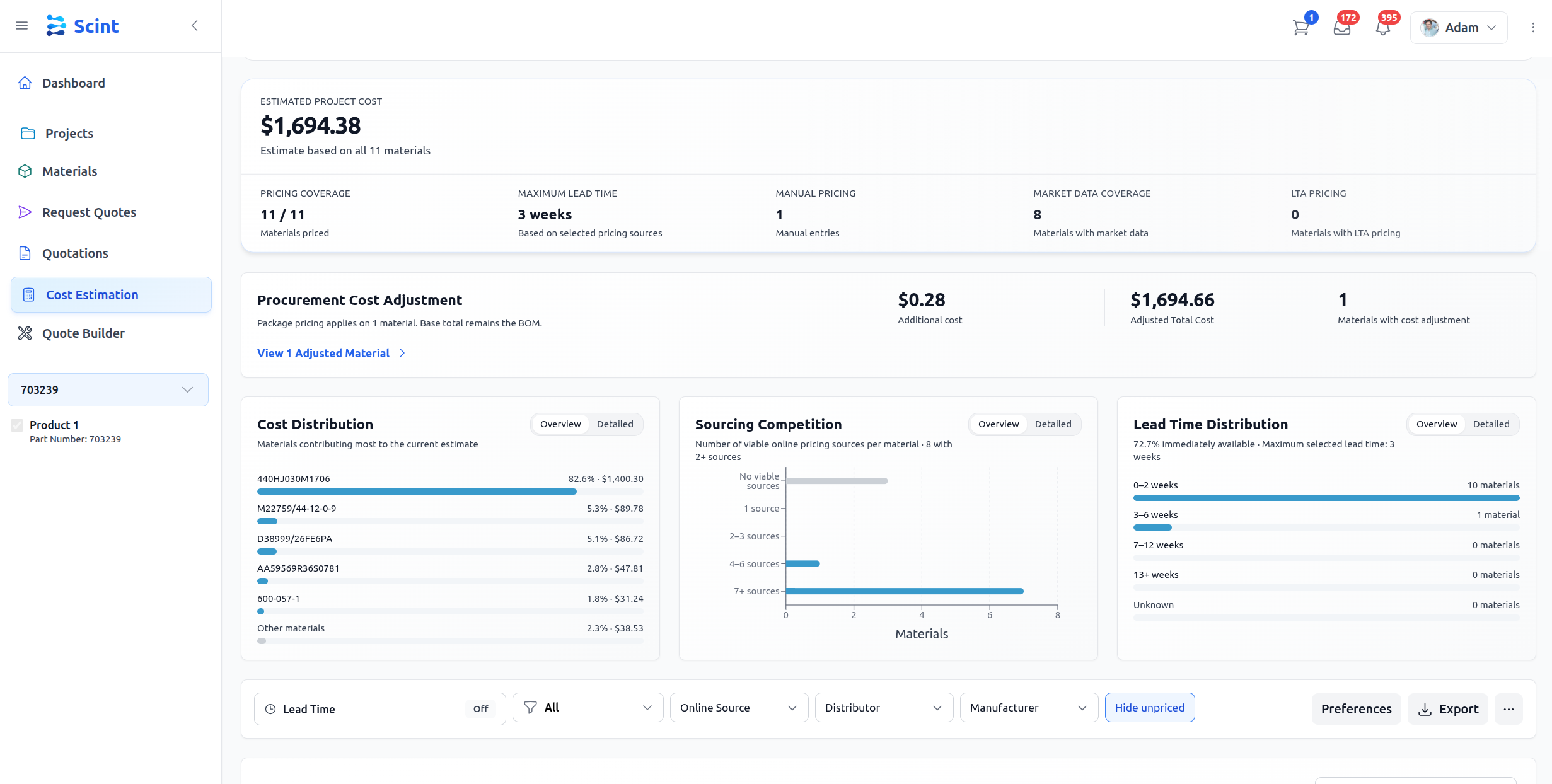
Combining connected pricing, historical records, supplier quotations, stock, and lead times helps reviewers identify coverage gaps and compare available sources in project context.
4. Assist labor and operation review
AI can help examine labor worksheets, operation sequences, material categories, and prior job context. The goal is to expose assumptions for review—not to remove engineering responsibility.
5. Move reviewed decisions into action
A context-aware assistant can draft supplier emails, import reviewed materials, and generate work-instruction drafts without forcing users to copy information into a separate chat or tool.