
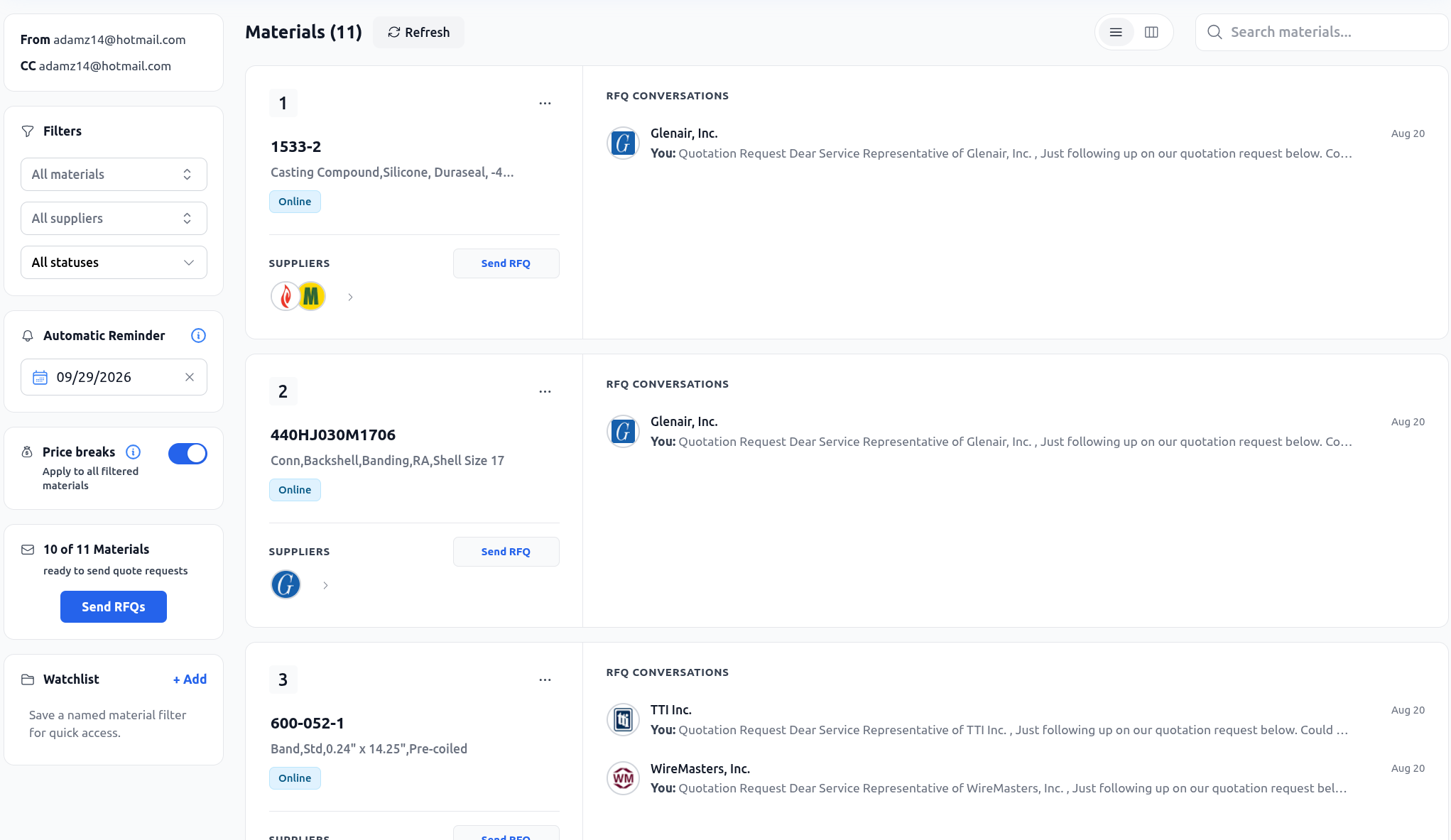
1. Structure the request before sourcing
Start by keeping the customer request, BOM, drawings, specifications, and revision context together. Normalize material identifiers and quantities before contacting suppliers so every request uses the same source data.
2. Review material coverage
Separate materials with current pricing from those that require supplier outreach. Review historical, contract, manual, and connected distributor data so the team does not request quotes unnecessarily.
3. Send consistent supplier RFQs
Use reviewed material selections, supplier history, and consistent email templates. Keep each outbound request connected to its materials and project rather than tracking it in a separate inbox spreadsheet.
4. Turn responses into comparable data
Process Excel, PDF, and email quotation attachments into structured offers. Preserve supplier, quantity, unit price, lead time, and source document details so reviewers can verify the result.
5. Compare tradeoffs in project context
Evaluate cost, coverage, lead time, and available price breaks together. Keep the selected data attached to the same job so it can inform quoting, labor planning, and downstream manufacturing work.